Burkina Faso
Nouna
CRSN · Nouna HDSS
Population cohorts, heat and farmer health.
CHEERS Network / Collaborative research
A research network combining population cohorts, environmental monitoring and wearable measurements to understand climate-related health risks and adaptation.
Climate Change and Health Evaluation and Response System
Research settings
Burkina Faso
CRSN · Nouna HDSS
Population cohorts, heat and farmer health.
Kenya
KEMRI · Siaya HDSS
Wearables, agricultural work and HIV research.
Malaysia
Monash University Malaysia · SEACO
CHIMES monitoring and community heat adaptation.
Projects in focus
Nouna & Siaya
Heat exposure, farmer health, work capacity, harvests and nutrition.
Published study protocolSEACO / Segamat
Weather, household conditions and wearable health observations.
Field collection complete · analysis ongoingSEACO / Segamat
Community heat literacy and research on cooler homes.
Adaptation researchHeidelberg & research partners
Knowledge graphs and AI for linked climate and health data.
Research programme · 2023–2028Nouna & Siaya
Long-term population research linked with local environmental measurements.
Established research platformSiaya
Wearable and survey research among people with and without HIV.
Published study protocolExplore the network
12 locations · 15 projects and methods contributions
Research, developing work, exchange and coordination.
Choose filters, a marker or a location below to explore projects and collaboration contacts.
12 of 12 locations · 15 linked projects and methods contributions
Filters combine. Research focus reflects documented projects, methods and regional research concepts; location labels show the type of connection. Each project has its own implementation stage.
Locations are approximate. Lines indicate shared listed projects or coordination links, rather than equivalent implementation. Zoom centres on the selected location.
Base map: Natural Earth.
Nouna selected. 6 linked projects.
View selected location and projects ↓Burkina Faso · Implemented research
Centre de Recherche en Santé de Nouna (CRSN)
Long-term population follow-up combined with wearable, household and environmental observations. Nouna is the first full implementation described in the CHEERS framework, with integrated research beginning in 2022.
Location profile ↗The focus is documented through this location’s methods or scientific exchange. No linked project in this view is classified under that focus.
Contact the listed research or institutional team about methods exchange and possible joint studies.
Research profile: Dr Ali Sié ↗All location contacts ↗Email Dr Ali Sié ↗Kenya · Implemented research
Kenya Medical Research Institute (KEMRI)
Population-based studies connect weather exposure to wearable measurements of sleep, activity and heart rate. Related projects investigate farmers’ heat strain and weather-related health challenges among people living with HIV.
Location profile ↗The focus is documented through this location’s methods or scientific exchange. No linked project in this view is classified under that focus.
Contact the listed research or institutional team about methods exchange and possible joint studies.
Research profile: Dr Stephen Munga ↗All location contacts ↗Email Dr Stephen Munga ↗Malaysia · Implemented research
South East Asia Community Observatory · Monash University Malaysia
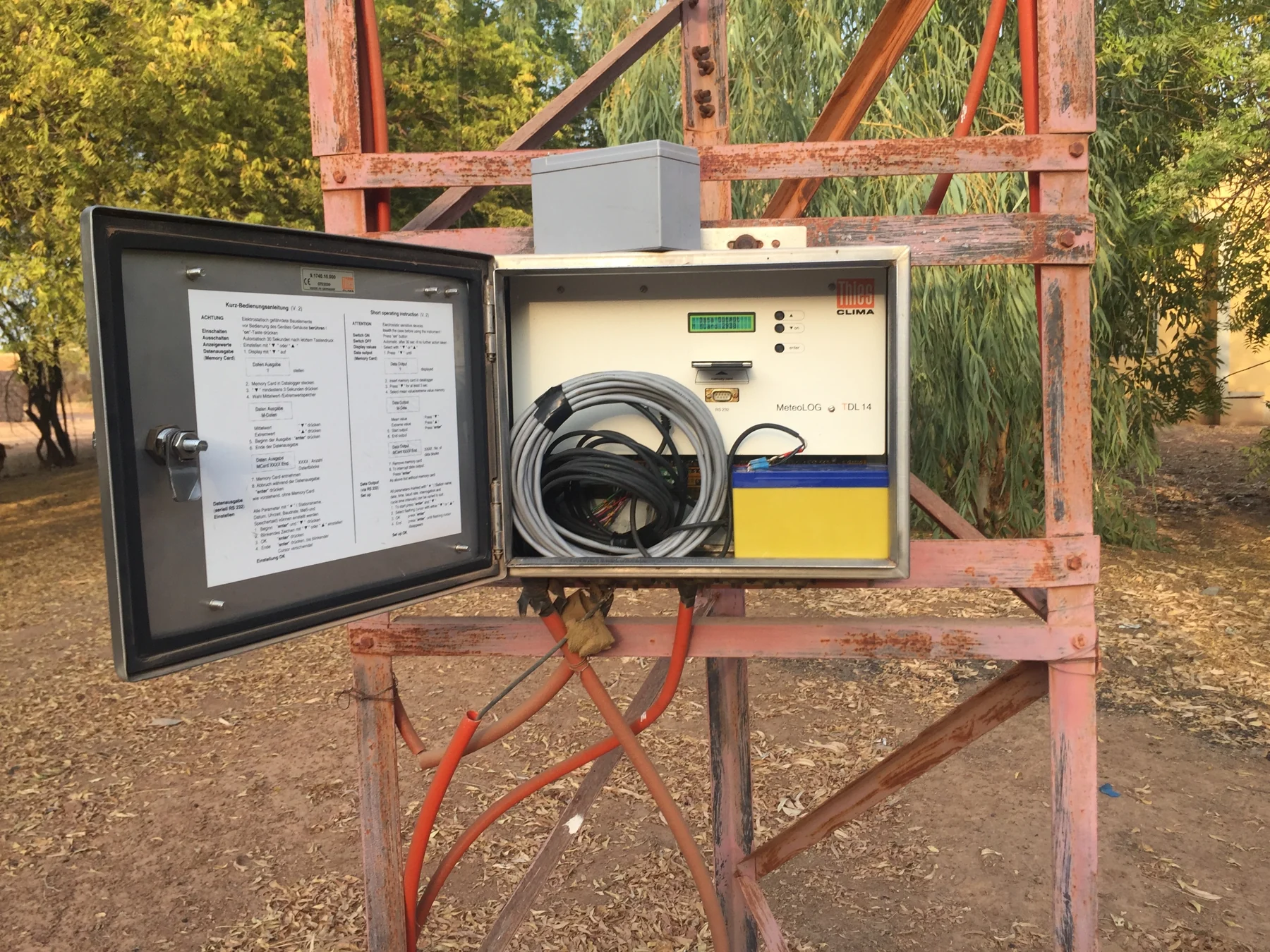
CHIMES combines population follow-up with wearables, indoor measurements and locally developed weather stations. Work in this setting includes respiratory and cardiovascular health and partner-led evaluation of heat adaptation.
Location profile ↗The focus is documented through this location’s methods or scientific exchange. No linked project in this view is classified under that focus.
Contact the listed research or institutional team about methods exchange and possible joint studies.
Research profile: Prof Tin Tin Su ↗All location contacts ↗Email Prof Tin Tin Su ↗India · Developing pilot
KEM Hospital Research Centre · Pune
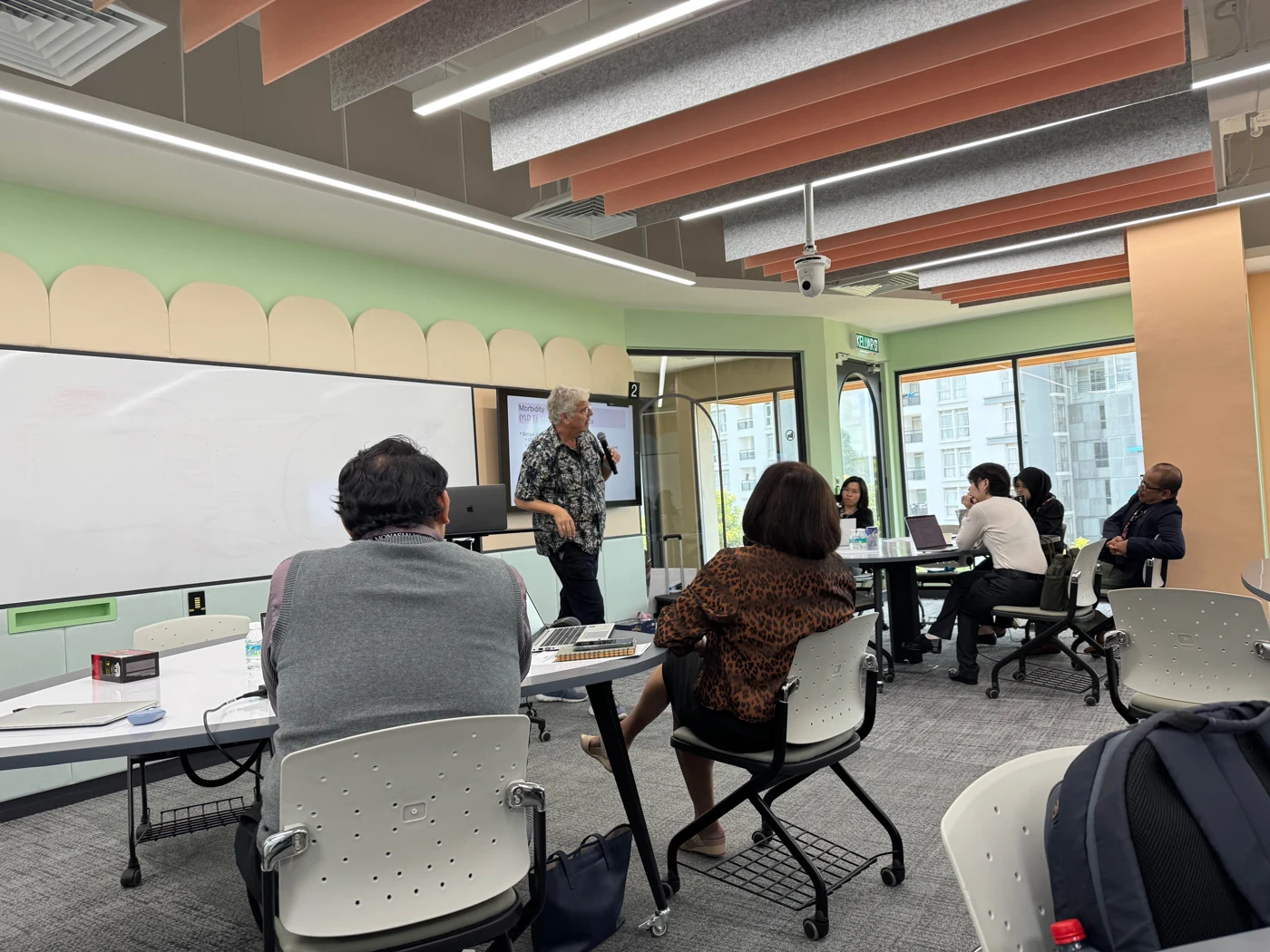
Vadu is adapting the CHEERS approach to a South Asian population cohort. Workshop and pilot development bring together morbidity surveys, household and environmental monitoring, wearables and culturally appropriate mental-health measures.
Location profile ↗The focus is documented through this location’s methods or scientific exchange. No linked project in this view is classified under that focus.
Contact the listed research or institutional team about methods exchange and possible joint studies.
Research profile: Dr Dhiraj Agarwal ↗All location contacts ↗Email Dr Dhiraj Agarwal ↗Bangladesh · Regional exchange
icddr,b
Colleagues from icddr,b participate in CHEERS-SEA technical and scientific exchange. The collaboration creates space to discuss how established population surveillance can inform climate and health research.
Location profile ↗No separate local CHEERS project is currently listed. This location is connected through CHEERS-SEA exchange.
CHEERS-SEA workshop ↗Contact the listed research or institutional team about methods exchange and possible joint studies.
icddr,b collaboration office · institutional contact ↗All location contacts ↗Email icddr,b collaboration office ↗Thailand · Regional exchange
Institute for Population and Social Research · Mahidol University
Kanchanaburi colleagues contribute to CHEERS-SEA discussions and regional collaboration. Current exchange concerns research methods, environmental exposures and opportunities for comparative population studies.
Location profile ↗No separate local CHEERS project is currently listed. This location is connected through CHEERS-SEA exchange.
CHEERS-SEA workshop ↗Contact the listed research or institutional team about methods exchange and possible joint studies.
Research profile: Malee Sunpuwan ↗All location contacts ↗Email Malee Sunpuwan ↗Vietnam · Regional exchange
Hanoi Medical University
FilaBavi researchers take part in CHEERS-SEA meetings and activities. Regional discussions explore shared climate and health questions and opportunities to connect surveillance expertise across countries.
Location profile ↗No separate local CHEERS project is currently listed. This location is connected through CHEERS-SEA exchange.
CHEERS-SEA workshop ↗Contact the listed research or institutional team about methods exchange and possible joint studies.
Research profile: Tran Khanh Toan ↗All location contacts ↗Email Tran Khanh Toan ↗Indonesia · Regional exchange
Universitas Gadjah Mada
Sleman researchers participate in CHEERS-SEA scientific exchange. The developing collaboration brings local population-health expertise into discussions of climate-sensitive outcomes and shared study methods.
Location profile ↗The focus is documented through this location’s methods or scientific exchange. No linked project in this view is classified under that focus.
Contact the listed research or institutional team about methods exchange and possible joint studies.
Research profile: Dr Ema Madyaningrum ↗All location contacts ↗Email Dr Ema Madyaningrum ↗Germany · Coordination & methods
Heidelberg Institute of Global Health (HIGH)
An academic hub for CHEERS framework development, digital global health, epidemiology, graph-based data integration and research collaboration. Heidelberg supports field partnerships; it is not an HDSS field cohort.
Location profile ↗These are methods and coordination links. Field research takes place at the study settings named in each project profile.
The focus is documented through this location’s methods or scientific exchange. No linked project in this view is classified under that focus.
Contact the listed research or institutional team about methods exchange and possible joint studies.
Research profile: Dr Sandra Barteit ↗All location contacts ↗Email Dr Sandra Barteit ↗Brazil · Developing pilot
Federal University of Pará · Heidelberg collaboration
A developing pilot in the Amazonian setting of Belém connects wearable monitoring with household temperature and humidity measurements. Local training and workflow preparation are documented; collection progress and study outcomes are not yet reported here.
Location profile ↗The focus is documented through this location’s methods or scientific exchange. No linked project in this view is classified under that focus.
Contact the listed research or institutional team about methods exchange and possible joint studies.
Research profile: Dr Sandra Barteit ↗All location contacts ↗Email Dr Sandra Barteit ↗Kenya · Planned REFRAME setting
Kenya Medical Research Institute · Isiolo HDSS
Isiolo HDSS is a planned core setting for REFRAME, connecting climate-related livelihood disruption, food insecurity and mental health. This planned work is distinct from the established CHEERS research in Siaya.
Location profile ↗The focus is documented through this location’s methods or scientific exchange. No linked project in this view is classified under that focus.
Contact the listed research or institutional team about methods exchange and possible joint studies.
Research profile: Dr Sandra Barteit ↗All location contacts ↗Email Dr Sandra Barteit ↗Japan · Planned REFRAME setting
Kyoto University · Ritsumeikan University
The planned Japanese REFRAME satellite brings together Kyoto University and Ritsumeikan University to examine the transferability of preparedness instruments and educational role-play in a distinct cultural and institutional setting.
Location profile ↗The focus is documented through this location’s methods or scientific exchange. No linked project in this view is classified under that focus.
Contact the listed research or institutional team about methods exchange and possible joint studies.
Research profile: Dr Sandra Barteit ↗All location contacts ↗Email Dr Sandra Barteit ↗No location matches all selected filters. Change a filter or clear them to explore the full network.
Discuss a research collaboration ↗The CHEERS approach
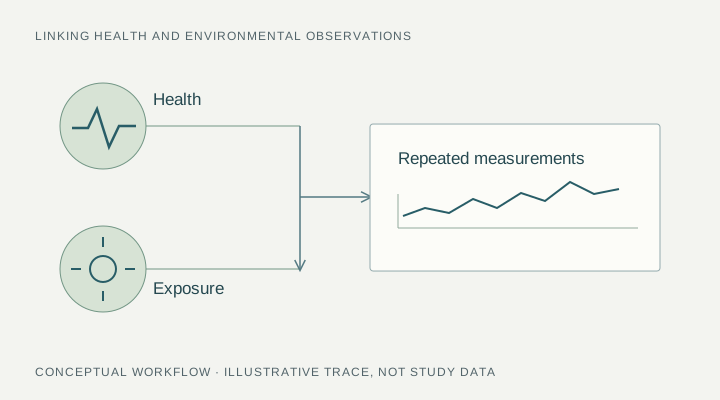
The Climate Change and Health Evaluation and Response System connects people, places and repeated measurements. Teams adapt the framework to their local research priorities.
Wearables, surveys and health assessments follow how people live, work and sleep.
Weather stations and household sensors document local environmental conditions.
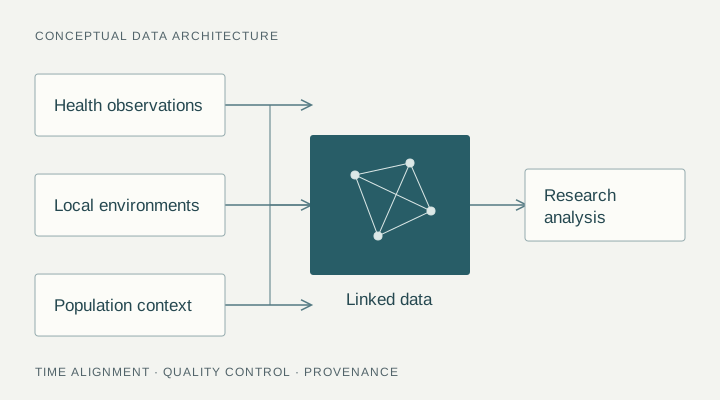
Linked data and analytical methods bring observations into a shared research context.
Scientific foundation: Barteit et al. · Frontiers in Public Health, 2023
Published evidence
The framework / 2023
Barteit et al. · Frontiers in Public Health
Field observations · Siaya / 2024
Matzke et al. · JMIR mHealth and uHealth
Heat and sleep · Nouna / 2023
Koch et al. · JMIR mHealth and uHealth
Scientific exchange / 2026
October / Bangkok
Heat Care collaborators contributed to the HeatNexus synthesis writeshop and participated in the Global Heat Forum, connecting community heat-adaptation research with wider scientific and policy discussions.
Related scientific exchange · Heat Care / HeatNexus
September / Nairobi
The inaugural APCC Climate and Health Technical Working Group meeting brought cohort researchers together to discuss shared priorities, data integration and evidence for adaptation.
Related scientific exchange · APCC Climate and Health
April / Malé
REACH partners met at Maldives National University to develop regional climate-health collaboration, publications and digital learning, including work on a massive open online course.
Related regional exchange · REACH
Wider research connections
Participate / Collaborate
Connect with researchers, cohort teams and methods specialists to develop useful climate and health research together.
Explore ways to collaborate
Research & network enquiries
Digital Global Health
Heidelberg Institute of Global Health