Heidelberg Institute of Global Health (HIGH) ↗
Digital Global Health, shared methods and academic research collaboration
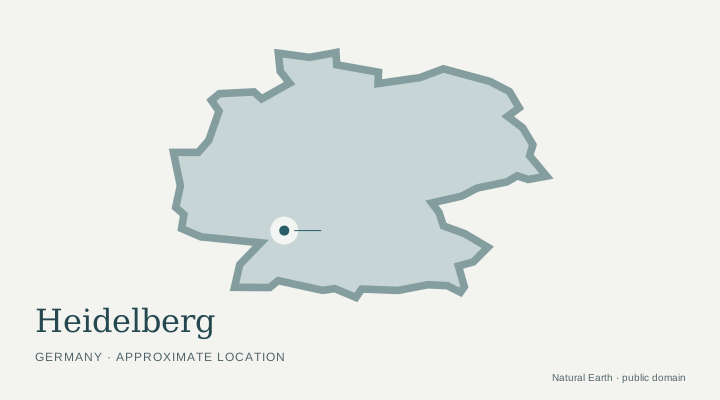
Academic coordination · Germany
An academic hub for CHEERS framework development, digital global health, epidemiology, graph-based data integration and research collaboration. Heidelberg supports field partnerships; it is not an HDSS field cohort.
Research priorities
Digital Global Health · PULSE-AI · Methods · Training and collaboration
Goals & priorities
Place & research context
Partners & connections
Digital Global Health, shared methods and academic research collaboration
Heat stress and environmental physiology expertise
The institutions and roles shown here describe the documented research and exchange connections. Responsibilities for individual studies are set by the participating teams.
Current status · 12 November 2026
Heidelberg provides academic coordination and methods development, including Digital Global Health and PULSE-AI. It supports institutional field partnerships and training. This profile describes an academic hub rather than an HDSS field cohort. Separately, the developing REFRAME project plans a German satellite and research coordination here, with a January 2027 start planned and EU contract preparation ongoing. This prospective contribution is distinct from the activities described above.
Publications & evidence
The labels distinguish project or site publications from related studies and shared methods. Protocols describe research designs, rather than proven health effects.
Introduces the modular CHEERS framework linking population surveillance, environmental measurements and individual health data.
Methods, findings & limitations ↗Shows how Nouna population, weather, wearable and indoor climate datasets can be linked in a knowledge graph.
Methods, findings & limitations ↗Compares consumer-grade and established research devices under standardized conditions for field research in Africa.
Methods, findings & limitations ↗Maps the use of wearables to study health effects of extreme weather.
Methods, findings & limitations ↗Connected projects
Sources & updates
Profile reviewed 12 November 2026. Suggest a profile update ↗
Network resources & exchange